
 +86 15853145085
Paint spray exhaust mainly comes from the volatilization of organic solvents and thinners. These organic solvents do not adhere to the painted surface along with the paint; instead, they are fully released during the spraying and curing processes, forming organic waste gas. Tianhaoyang points out that collecting and separating paint mist from polluted air is crucial for improving painting quality, enhancing the working environment, and meeting environmental emission standards.
Currently, the main treatment processes for organic waste gas include: Isolation Method, Combustion Method, Absorption Method, and Condensation Method.
- Isolation Method
This method uses specialized filter materials placed in the exhaust discharge path to achieve pollution control through mechanical isolation.
Pros: High efficiency in treating paint mist, no complex technical requirements, and simple operation.
Cons: Cannot effectively remove organic compounds. - Combustion Method
This method directly burns organic waste gas at high temperatures to achieve purification. - Pros: High purification efficiency, reaching over 95%.
Cons: Requires a massive amount of thermal energy. For instance, direct combustion of toluene requires temperatures around 800°C , which consumes significant energy. It also easily generates secondary pollutants like NOx at high temperatures.
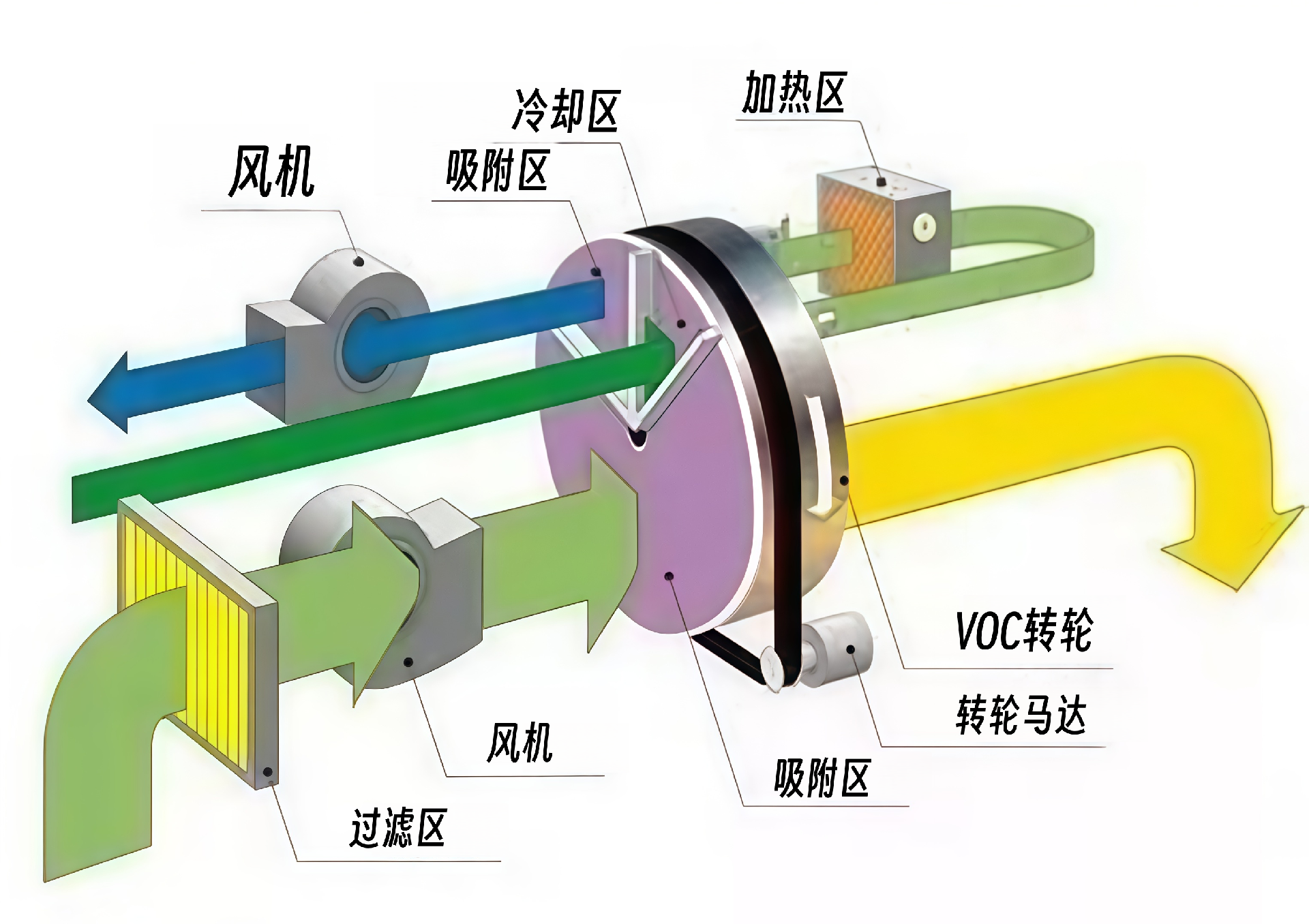
- Absorption Method
This method brings the waste gas into contact with an absorption liquid, allowing harmful substances in the gas to dissolve into the liquid, thereby purifying the exhaust. The used absorption liquid requires separate treatment.
Pros: Low investment, low operating costs, and simple operation.
Cons: Low and unstable treatment efficiency (around 50%), making it difficult to meet relevant environmental standards. It is only suitable for low-concentration organic waste gas and poses risks of secondary pollution. - Condensation Method
This method cools the gas through condensation. When the temperature drops below the dew point of the harmful substances, the gaseous pollutants turn into liquid and separate from the air, achieving purification.
Pros: Stable operation and high purification efficiency.
Cons: High initial investment, strict requirements for the environment and operators, excessive energy consumption, and high operating costs.