 +86 15853145085

 全国服务热线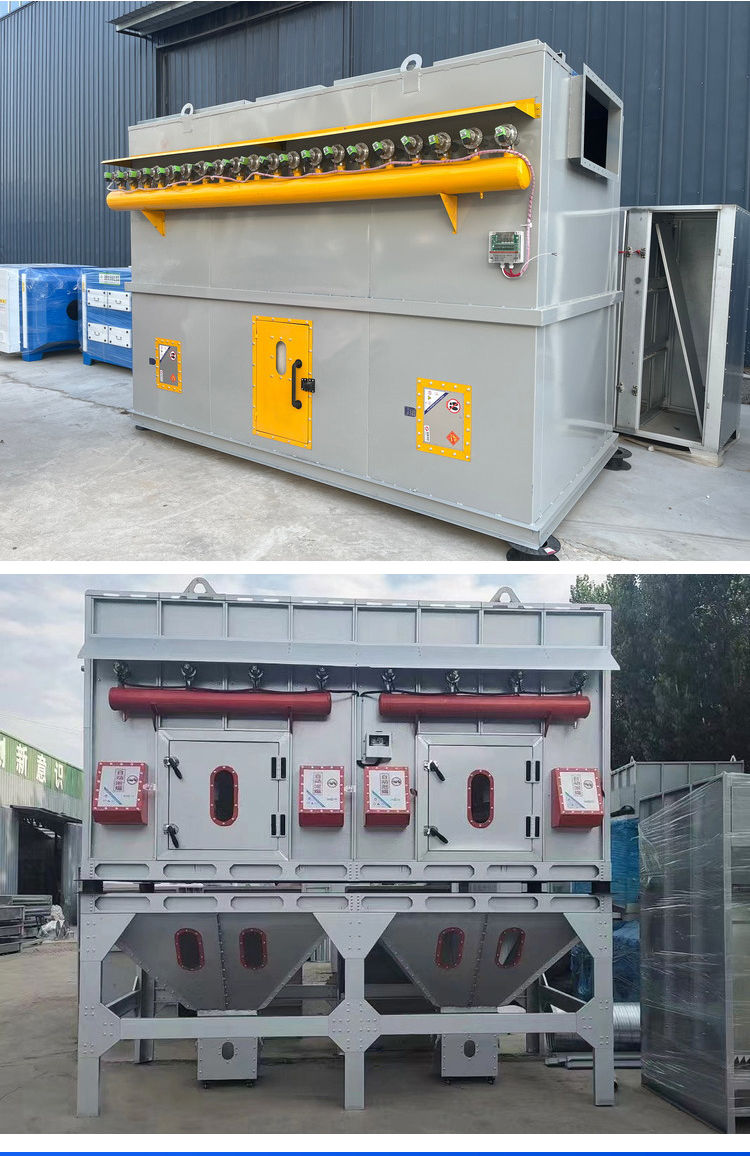
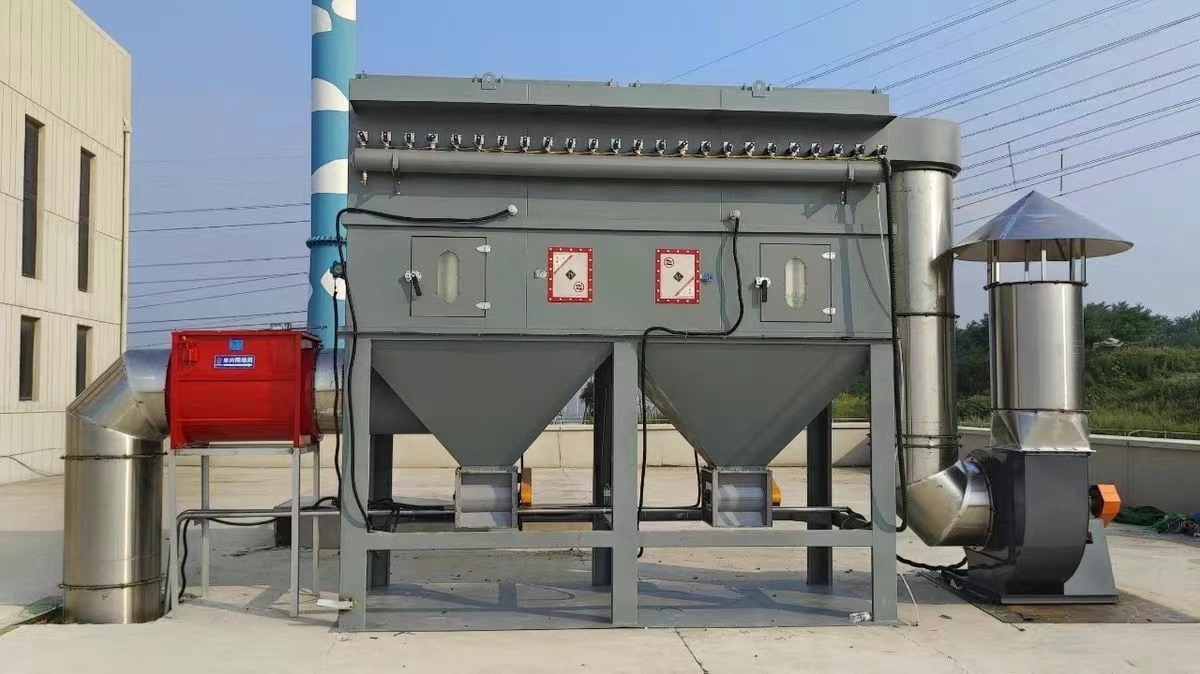
he baghouse dust collector is a high-efficiency dry-type dust removal device, mainly applied to capture fine, dry and non-fibrous dust.
Working Principle
Dust-laden gas enters the collector through the air inlet, gets evenly distributed by flow deflectors and then passes through filter bags. Dust is intercepted on the outer surface of filter bags, while clean air flows into the clean air chamber and is discharged from the air outlet.
Dust accumulation will increase equipment resistance. Ash cleaning is required when the resistance reaches 1200-1500Pa. Common cleaning methods include pulse jet cleaning, mechanical rapping and reverse air blowing.
Structural Composition
It mainly consists of frame, cabinet body, filter bags, ash cleaning device and driving system. The frame supports the whole cabinet which is divided into filter chamber and clean air chamber separated by tube sheets. Filter bags are core components made of natural fiber, chemical fiber or inorganic fiber. The ash cleaning unit composed of pulse valves and injection pipes removes surface dust, and the exhaust fan provides airflow power.
Characteristics
Advantages
It achieves dust removal efficiency over 99.9% with stable low emission concentration. It has good adaptability to various types of dust, featuring stable operation and easy maintenance.
Disadvantages
It has strict requirements on flue gas temperature, humidity and composition, accompanied by large pressure loss, bulky volume, high steel consumption and relatively high operating cost.
Application Fields
It is widely used in power industry, iron and steel metallurgy, cement production, non-ferrous metal smelting, chemical and pharmaceutical industry, wood processing, grain and food processing and other industries. It is used for flue gas purification of coal-fired boilers in power plants, dust control in all production links of iron and steel factories, and high-concentration dust collection for raw material mills and cement mills in cement plants.
Development Trend
In the future, baghouse dust collectors will develop towards higher efficiency, intelligence and energy conservation, such as adopting nanofiber filter materials to improve filtering performance, realizing remote monitoring via IoT technology and optimizing structural design to reduce airflow resistance.

Cabinet Structure
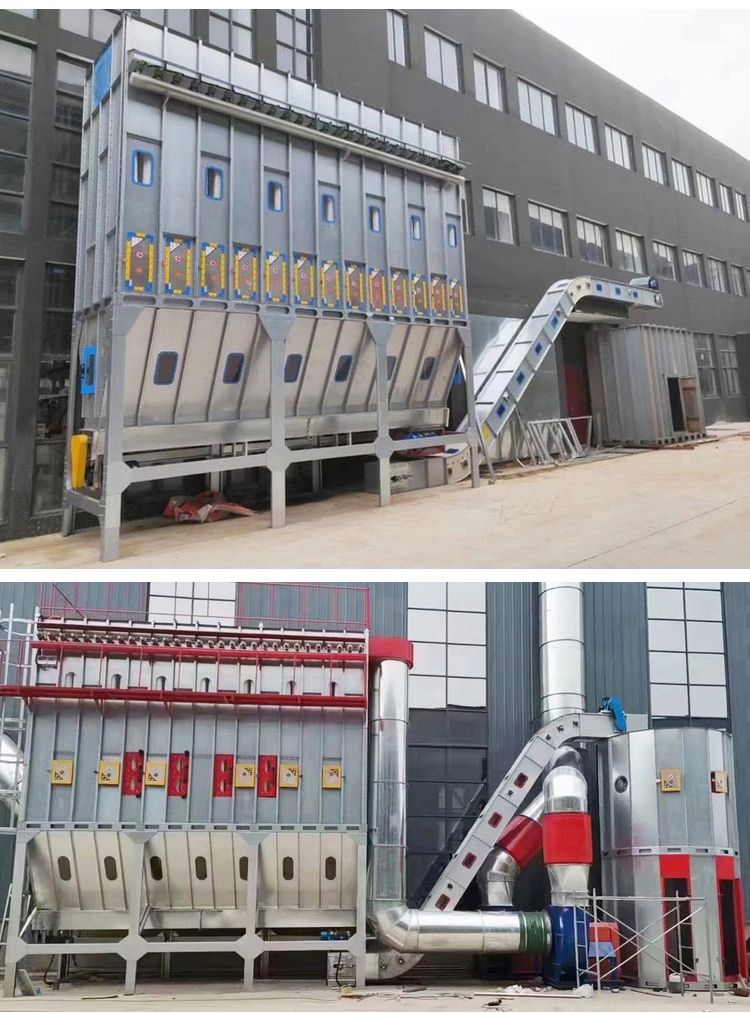
As the main framework, the cabinet is divided into upper cabinet, middle cabinet and ash hopper. The upper cabinet serves as clean air chamber for clean gas circulation; the middle cabinet is the core filtering area equipped with filter bags; the conical ash hopper at the bottom is used for dust collection.
Filtration System
It is composed of filter bags, bag cages and tube sheets. Filter bags made of polyester fiber intercept dust via tiny surface pores. Bag cages support filter bags against deformation. The bag mouths are firmly fixed on tube sheet holes to prevent air leakage.
Ash Cleaning System
It includes pulse valves, injection pipes and air tanks. As key control parts, pulse valves switch on and off compressed air according to control signals. The nozzles on injection pipes align with filter bags, and air tanks store compressed air for stable ash cleaning air supply.
Air Inlet & Outlet System
Consisting of air inlet, air outlet and airflow distributors, the air inlet is arranged on side or bottom for uniform intake of dusty gas. The air outlet is set on the top of upper cabinet for smooth discharge of purified air. Built-in distributors realize even airflow distribution inside the equipment.
Dust Discharging System
It comprises ash discharge valves and dust conveying devices. Star-shaped ash discharge valves installed at hopper bottoms realize quantitative dust discharge. Conveying equipment such as pneumatic conveyors and mechanical conveyors transport collected dust to designated positions.
Control System
Adopting PLC automatic control technology, it accurately regulates ash cleaning cycle and dust discharging procedures. It is equipped with fault diagnosis and alarm functions to monitor real-time operating parameters and ensure safe and stable equipment operation.
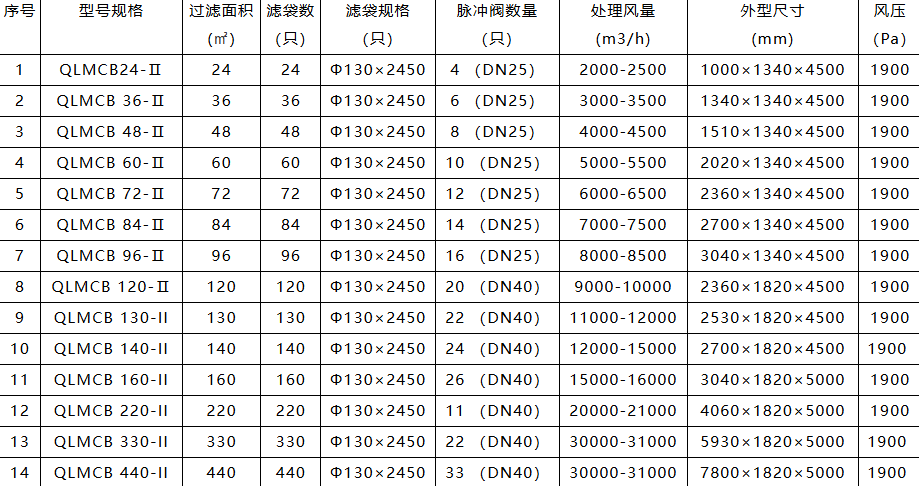
Model and Parameters of Pulse Bag Dust Collector