
 +86 15853145085
Activated carbon adsorption is the most common and universal technology in the VOCs treatment industry. Most combined waste gas treatment processes are equipped with activated carbon adsorption systems. In addition, carbon boxes are widely applied as terminal emergency treatment equipment for exhaust systems. Although activated carbon adsorption technology is extensively used in the VOCs industry, most users cannot fully master its potential safety risks. This chapter systematically sorts out the safety problems of activated carbon waste gas treatment.
Activated carbon adsorption devices are widely used in the pharmaceutical and chemical industry. Due to the high investment cost of RTO and other thermal oxidation equipment, many enterprises with limited funds choose activated carbon adsorption for cost savings. However, numerous users ignore potential safety hazards while pursuing economic benefits.
Activated carbon is specially processed carbon material. Organic raw materials such as fruit shells, coal and wood are carbonized under an oxygen-free environment to remove non-carbon components. Then the materials react with specific gas for surface etching to form abundant microporous structures. The microscopic etching forms countless tiny pores on the carbon surface.
The micropore diameter of activated carbon is generally between 2 nm and 50 nm. Even a small amount of activated carbon possesses an extremely large specific surface area of 500~1500 m² per gram. Particle activated carbon is commonly used for organic waste gas purification. Waste gas flows through the carbon bed to realize physical adsorption and concentration reduction. Adsorption is an exothermic process. Pollutant molecules adhere to the solid surface with reduced free energy, releasing adsorption heat.
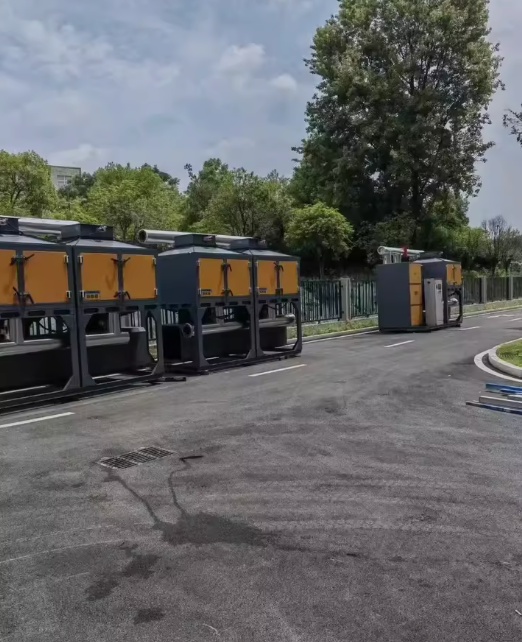
Apart from physical adsorption, slow oxidation occurs between oxygen, activated carbon and adsorbed organic substances. The large specific surface area further accelerates oxidation. Moreover, incompatible chemical components in complex waste gas will trigger exothermic chemical reactions under the catalytic effect of activated carbon. All exothermic reactions lead to heat accumulation and potential safety hazards.
According to previous fire and explosion cases of activated carbon tanks, most accidents have the following characteristics:
1. Most accidents occur in high-temperature summer seasons with direct sunlight and an average daily temperature above 32℃;
2. The activated carbon has not been replaced for a long time with excessive ash and impurities;
3. The waste gas composition is complex, containing acetone, ethyl acetate, alcohols, methylene chloride, organic amines, acidic gas and alkaline gas;
4. The VOCs concentration fluctuates sharply. Accidents usually occur under low-load working conditions with excessive air mixing into the waste gas pipeline.
Under high ambient temperature, complex waste gas releases physical and chemical reaction heat during adsorption. Long-term service leads to excessive ash accumulation and poor heat dissipation inside the carbon bed, resulting in local hot spots. The continuous temperature rise reaches the autoignition point of activated carbon or the flash point of mixed organic gas. Excessive air enters the pipeline and forms explosive mixed gas with combustible VOCs. Static electricity is also regarded as a potential ignition source.
Adsorption and organic oxidation continuously release heat. Complex chemical components may cause incompatible exothermic reactions on the carbon surface, especially under high concentration working conditions. The temperature variation depends on heat balance. Convection heat dissipation is the main cooling method for carbon beds. Insufficient air volume leads to heat accumulation, temperature surge, organic gas ignition and carbon autoignition.
1. For reactors, storage tanks and filters that generate high-concentration organic waste gas, nitrogen sealing and positive-pressure conveying systems are recommended to prevent explosive gas mixture formation.
2. The condensation device shall meet production load requirements to reduce organic concentration. Incompatible waste gas must be pretreated separately before entering carbon adsorption tanks.
3. Select low-ash and high-ignition-temperature activated carbon, and implement regular carbon replacement schedules.
4. Install auxiliary cooling devices for adsorption equipment if conditions permit.
5. Regularly inspect pipelines and equipment for air leakage to ensure airtightness.
6. Install detonation-resistant flame arresters on waste gas pipelines. Bursting discs shall be installed on segmented pipelines and buffer tanks with fixed protective structures.
7. Equip the adsorption device with manual or automatic water spray or steam fire-extinguishing systems to suppress initial fire hazards.
8. Arrange temperature sensors inside the carbon bed for real-time temperature monitoring and early risk warning.
9. Strengthen staff safety training to improve emergency disposal capability and prevent fire spread.
活性炭吸附处置VOCs废气是VOCs治理行业最为普遍通用的做法,目前组合工艺中,基本少不了VOCs活性炭吸附系统,或者应急排空系统的末端VOCs治理措施都是活性炭箱体,那作为VOCs治理市场中用得最为广泛的活性炭吸附工艺,其系统的安全性其实是很少有人能完全掌握,下面我们来梳理下:
活性炭处理废气相关安全问题:
在医药化工行业的废气处理过程中,活性炭吸附装置得到了广泛的应用。尤其在VOCs治理方面,部分公司由于资金有限,RTO蓄热焚烧等处置方式成本较高,活性炭吸附在此时成为一个颇具性价比的选择。成本的问题是考虑到了,但是其中的安全风险是否考虑到了呢?
活性炭的制备与特性
活性炭是一种经特殊处理的炭,将有机原料(果壳、煤、木材等)在隔绝空气的条件下加热,以减少非碳成分(该过程称为炭化),然后与特定气体反应,表面被侵蚀,产生微孔发达的结构(此过程称为活化)。由于活化的过程是一个微观过程,即大量的分子碳化物表面侵蚀是点状侵蚀,所以造成了活性炭表面具有无数细小孔隙。
活性炭表面的微孔直径大多在2~50 nm之间,即使是少量的活性炭,也有巨大的表面积,每克活性炭的表面积为500~1500 m2,活性炭的一切应用,几乎都基于活性炭的这一特点。正是基于这一点,所以在有机废气处理时使用颗粒活性炭,让气流通过活性炭层进行吸附,进而降低有机废气的浓度。而吸附过程是污染物分子被吸附到固体表面的过程,分子的自由能会降低,因此,吸附过程是放热过程,所放出的热称为该污染物在此固体表面上的吸附热。
VOCs在活性炭中除了有物理吸附现象外,活性炭本身以及吸附的有机物还会与氧气发生缓慢氧化,其较大的比表面积会也会加剧这一氧化的过程。此外当废气中含有一些不相容的化学物质时,其不相容反应在活性炭的催化下也会加速。这些都是放热的过程,同样会引起活性炭的热积聚风险。
活性炭设备事故原因及分析
参照以往发生过的活性炭箱、罐事故场景,多具备以下特征:
1、事故多发生在夏季高温,事故当日气温较高,太阳直射时间较长,白天平均气温达到了32℃以上。
2、着火的活性炭吸附罐中的活性炭长时间未更换环,灰分杂质很多。
3、经过活性炭吸附罐的废气成分比较复杂。含有丙酮、乙酸乙酯、醇类、二氯甲烷、有机胺类以及酸性废气及碱性废气。
4、事故当天废气的浓度波动较大,均发生在低工况时,废气量减少,部分空气直接进入了废气中。
结合事故发生时的现场调查、生产情况、以往异常情况分析,推测这几起活性炭吸附罐着火和爆炸的直接原因:气温较高的情况下,工况复杂的废气经过活性炭处理(吸附)过程中发热(物理和化学)。由于活性炭长时间未更换,灰分较高,床层散热较差,不利于对流散热。致使热量在床层中积聚,在其中形成局部热点。导致其温度达到活性炭的自燃点或温度达到了混合有机物气体的闪点。同时部分空气进入废气中与可燃物形成爆炸性混合气体,最终导致了事故的发生。(当然静电也可能是一个可能的点燃源)
活性炭吸附是放热过程,有机物的吸附和氧化会释放出大量热量。对于一些成分复杂的化合物(可能会发生不相容的反应而放热),在活性炭表面上的吸附和反应会释放出大量的热量,尤其是如果废气中的化学品浓度很高时。其放热过程能否达到着火点取决于最终的热量平衡,即能否及时的将热量转移走。而在吸附过程中,热移出的方式主要靠对流。对流不利(风量较小)的时候,热量累计,碳床中的温度将升高到其着火温度,从而导致可燃废气混合物被点燃或活性炭自燃。
针对活性炭使用的建议
① 对于会产生高浓度有机废气的反应罐、贮罐、过滤器等设备,为避免与氧气形成爆炸性混合物,最好采用氮封系统保护,并以正压输送方式输送到废气总管。
② 确保有机废气的冷凝装置满足生产负荷,所有的废气组分必须经过有效的冷凝处理,降低有机气体浓度。不相容的废气应单独预处理后再排入吸附罐中吸附处理。
③ 活性炭选材:使用点火温度高,灰分低的活性炭作为吸附材料,并且及时更换。
④ 条件允许的话对吸附装置进行降温。
⑤ 定期检查处理装置、废气管路是否有不完整漏风的情况,要保证管路不漏气。
⑥ 吸附处理装置前的废气管路安装管路阻火器(阻爆轰型);管路上(分段)安装泄爆片,废气缓冲罐上安装泄爆板,泄爆板要有固定装置。
⑦ 吸附装置内安装喷淋灭火装置,用来扑灭初期火灾(或者直接加装自来水管路)手动或自动开启。(也可以用蒸汽)
⑧ 在吸附床层安装温度探头,监测活性炭层的温度发现异常时及时处置。
⑨ 应急反应与人员培训。培训人员发生火灾时的应急处置能力,要能及时扑灭吸附处理装置的火灾,防止火灾蔓延。