
 +86 15853145085
VOCs are widely existing compounds in the atmosphere. They refer to volatile organic compounds with a boiling point ranging from 50℃ to 260℃ and a saturated vapor pressure higher than 133.3 Pa at room temperature. Their main components include hydrocarbons, sulfides and ammonia. VOCs can form photochemical smog in the atmosphere, causing great harm to the environment and human health.
VOCs are not only ozone precursors, but also important precursors of PM2.5. Ozone is produced by the oxidation reaction between VOCs and nitrogen oxides (NOₓ) under sunlight. The formation of PM2.5 mainly involves secondary organic aerosols, which is a complicated atmospheric chemical process. Organic substances such as benzene and toluene form volatile intermediates through oxidation and polymerization. These substances further condense into secondary organic particles and eventually convert into PM2.5.
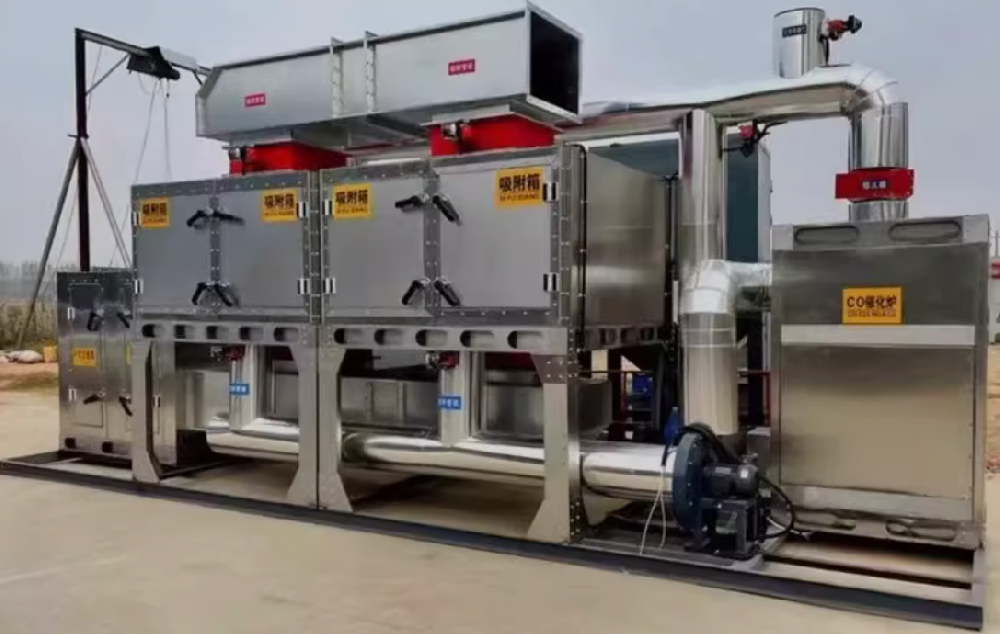
Due to high chemical activity, VOCs easily trigger photochemical reactions with nitrogen oxides under high temperature and strong light, aggravating fine particle pollution. China’s air quality standards contain six indicators: PM2.5, PM10, sulfur dioxide, nitrogen oxides, carbon monoxide and ozone. At present, ozone and PM2.5 are the dominant air pollutants in most provinces, which is closely related to VOCs emissions. Industry insiders pointed out that PM2.5 pollution has been improved in recent years, while ozone emission has hardly decreased in the past decade. Ozone will become a key monitoring and treatment pollutant in the future.
With increasingly stringent environmental policies, VOCs pollution control has been put on the priority agenda. According to the official VOCs pollution charge standard issued in Beijing, the emission fee for compliant enterprises is 10 RMB per kilogram. The charge rises to 40 RMB per kilogram for illegal discharge, including uninstalled waste gas treatment equipment, abnormal equipment operation and excessive VOCs emission. The penalty for excessive emission is four times the standard charge. To reduce costs, manufacturing enterprises must carry out standardized VOCs treatment. With the nationwide implementation of VOCs charging policies and government subsidies, environmental protection enterprises engaged in VOCs monitoring and governance will gain obvious market advantages.
By 2020, the industrial VOCs emission reduction market scale reached 180.9 billion RMB. The emission reduction demand for VOCs-containing products was 75.922 billion RMB, accounting for 41.53% of the total market. The market value of VOCs monitoring equipment reached 4.865 billion RMB. With continuously upgraded emission standards and expanding supervision scope, the overall market capacity of VOCs treatment will continue to grow.