
 +86 15853145085
Entrusting Party: Qingdao Oute Energy Saving Technology Co., Ltd.
1. Project Overview
2. Pollutant Analysis and Hazards
2.1 Main Pollutants
2.2 Formation and Hazards of Pollutants
2.2.1 Hazards to Human Health
2.2.2 Production Safety Risks
2.2.3 Ecological Environmental Impacts
Acidic waste gas combines with water vapor in the atmosphere to form acid rain, which acidifies soil and water bodies and damages the surrounding vegetation ecology. Diffused gases such as hydrogen chloride and sulfuric acid mist hinder the growth of surrounding crops, resulting in yellow leaves and reduced yield. Droplets containing metal ions settle with rainwater, polluting groundwater and surface water. Heavy metals accumulate through the food chain, endangering the balance of the ecosystem and human health, triggering environmental complaints and damaging corporate reputation.
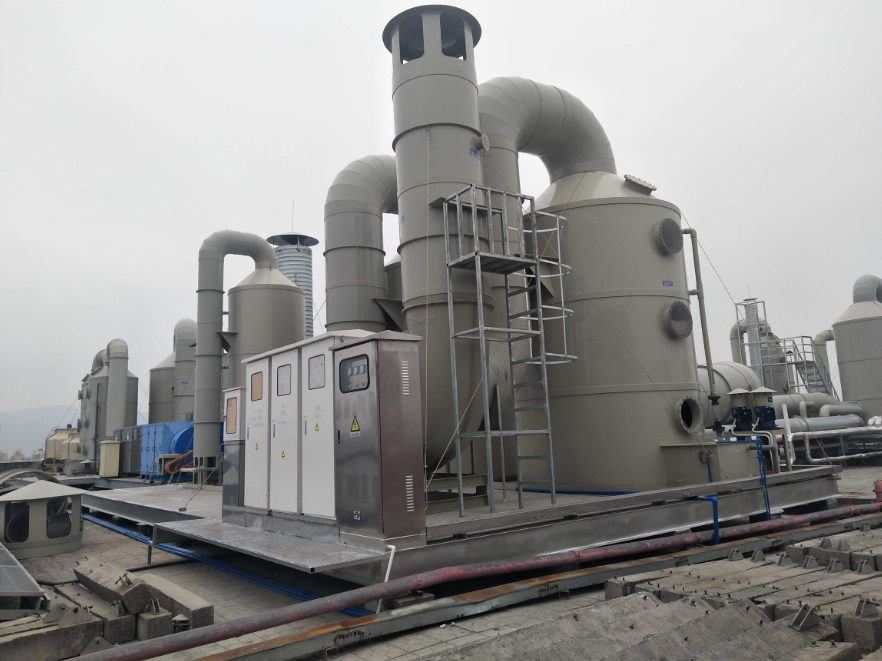
3. Design Basis and Principles
3.1 Design Basis
Environmental Protection Law of the People's Republic of China (Revised in 2015)
Atmospheric Pollution Prevention and Control Law of the People's Republic of China (Revised in 2018)
GB 16297-1996 Comprehensive Emission Standard of Air Pollutants
GBZ 2.1-2019 Occupational Exposure Limits for Hazardous Factors in Workplace Part 1: Chemical Hazardous Factors
GB 3095-2012 Ambient Air Quality Standards
HJ/T 387-2007 Industrial Waste Gas Adsorption and Purification Equipment
HJ 2001-2010 Technical Specification for Electroplating Wastewater Treatment Engineering (Including Waste Gas Treatment)
GB 37822-2019 Emission Control Standard for Volatile Organic Compounds Without Organization (Auxiliary Reference)
GB 50016-2014 Code for Fire Protection Design of Buildings (2018 Edition)
GB 50243-2016 Code for Acceptance of Construction Quality of Ventilation and Air Conditioning Engineering
GB 50235-2010 Code for Construction and Acceptance of Industrial Pipeline Engineering
National electrical industry standards: GB 50054-2011 Code for Design of Low Voltage Power Distribution
GB 50034-2013 Standard for Lighting Design of Buildings
On-site survey data and production requirements of the enterprise
Mature cases and technical data of acid mist treatment in domestic and foreign electronic and surface treatment enterprises
3.2 Design Principles
Accurate Compliance Principle: The emission of treated acid mist waste gas shall strictly comply with GB 16297-1996 standard, in which hydrogen chloride ≤10mg/m³, sulfuric acid mist ≤45mg/m³, nitric acid mist ≤20mg/m³ and hydrofluoric acid ≤1mg/m³. It shall also meet the local environmental protection requirements and unified environmental standards of XincaiFu Environmental Protection Electroplating Base.
Graded Purification Principle: The combined process of "pretreatment defogging + absorption tower neutralization + deep purification by demister" is adopted to remove acidic droplets first, neutralize acidic gas through alkaline absorption liquid, and intercept residual droplets to ensure thorough purification and no secondary pollution.
Anti-corrosion and Safety Principle: Equipment and pipelines are made of corrosion-resistant materials such as FRPP and PVC. The absorption tower is equipped with online monitoring devices for liquid level and pH value and automatic dosing system. Emergency collection devices are set to deal with sudden leakage and ensure stable system operation.
Economic Adaptation Principle: Spray absorption process is adopted with low-cost and widely available sodium hydroxide reagent. The air volume of the system accurately matches each production process and can be dynamically adjusted according to production load to control operation and maintenance costs while ensuring treatment efficiency.
4. Design Objectives
The purification efficiency of acid mist waste gas is ≥98%. After treatment, hydrogen chloride ≤10mg/m³, sulfuric acid mist ≤45mg/m³, nitric acid mist ≤20mg/m³, hydrofluoric acid ≤1mg/m³, and pH value ranges from 6 to 9, which fully meets national and local environmental protection standards to ensure stable compliant discharge.
A special exhaust funnel with a height of no less than 15 meters shall be constructed, equipped with sampling platform, monitoring holes and installation interfaces for online monitoring equipment in accordance with specifications. The waste gas is discharged at high altitude for sufficient diffusion to avoid impacts on the surrounding environment and other enterprises in the base.
The acid mist concentration at each operating point in the workshop is controlled within the limit of GBZ 2.1-2019 standard, among which hydrogen chloride ≤7.5mg/m³ and hydrofluoric acid ≤2mg/m³. Irritant odor is completely eliminated to improve the workshop operating environment and reduce occupational disease risks.
The system realizes automatic operation and intelligent monitoring with functions such as pH abnormal alarm, reagent shortage early warning and equipment fault self-diagnosis. The annual stable operation time is ≥8200 hours, adapting to the enterprise's multi-shift continuous production demand without secondary pollution during treatment.
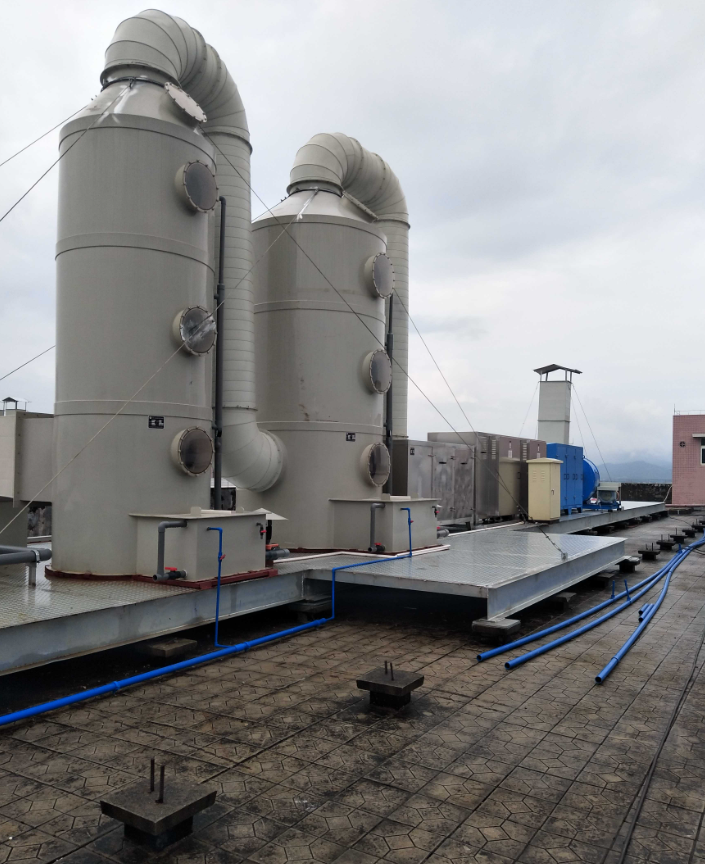
5. Acid Mist Waste Gas Treatment Process Design and Description
5.1 Process Selection Basis
Thorough purification effect: Acidic gases are highly water-soluble and react rapidly with alkaline sodium hydroxide solution. The first-stage absorption tower removes more than 80% of acidic gases, and the second-stage absorption tower deeply neutralizes residual components, with a total purification efficiency of over 98% to ensure all pollutants meet discharge standards.
Reliable corrosion resistance: All equipment is made of acid-resistant FRPP materials, pipelines are PVC reinforced pipes, and seals are fluororubber, which can resist long-term erosion of high-concentration acid mist with an equipment service life of ≥10 years.
Convenient operation and maintenance: The system adopts automatic control with real-time monitoring of absorption liquid pH value and liquid level and automatic reagent dosing, eliminating frequent manual operation. Spray nozzles and filter components adopt modular design for easy cleaning and replacement, reducing operation and maintenance costs.
Strong adaptability: The absorption liquid ratio can be adjusted according to waste gas components of different processes to meet the treatment demand of multi-component acid mist. The system has a wide air volume adjustment range, adapting to intermittent or continuous production modes to satisfy flexible production requirements.
5.2 Process Flow Chart
5.3 Detailed Process Description
Efficient source collection: Differentiated gas collection devices are set for different production processes. Acid cleaning and etching tanks are equipped with side suction tank-side gas collecting hoods with air outlets close to the liquid surface and wind speed controlled at 0.5-0.8m/s. Electroplating tanks adopt fully enclosed gas collecting hoods to ensure no acid mist leakage. All gas collecting hoods are summarized through PVC corrosion-resistant pipelines with the internal wind speed maintained at 12-15m/s to avoid acid mist condensation and deposition.
Pretreatment defogging: The waste gas firstly enters the pretreatment defogger to remove acidic droplets and metal particles with particle size ≥1μm through inertial collision principle. The defogging efficiency is ≥90%, which reduces the spray load of the subsequent absorption tower and prevents metal ions in droplets from depositing and blocking fillers inside the tower.
Two-stage spray neutralization: The pretreated waste gas enters the two-stage spray absorption system. The first-stage absorption tower is filled with polyhedral hollow ball fillers, and 1%-2% sodium hydroxide solution is sprayed to fully contact and react with acidic gases, removing more than 80% of hydrogen chloride and sulfuric acid mist. The incompletely neutralized waste gas enters the second-stage absorption tower for deep neutralization with slightly higher concentration (2%-3%) sodium hydroxide solution to ensure all acidic gas concentrations meet standards. The pH value inside the absorption tower is controlled at 8-10, accurately adjusted by an online monitor linked with an automatic dosing device.
Deep defogging and monitoring: The gas after two-stage neutralization enters the high-efficiency defogger, which intercepts residual tiny droplets (particle size ≥0.1μm) through wire mesh filtration with a defogging efficiency of ≥99%, avoiding secondary pollution caused by absorption liquid droplets discharging with tail gas. The system is equipped with online monitoring equipment to real-timely monitor the concentration of hydrogen chloride, sulfuric acid mist and other pollutants in exhaust gas, and the data is uploaded to the enterprise central control room and local environmental protection platform in real time.
Waste liquid and operation management: Saline waste liquid generated by the absorption tower is discharged into the sludge sedimentation tank. After removing metal ion sediments, part of the supernatant is recycled for spraying, and the remaining part is disposed of as hazardous waste in accordance with regulations. Regularly inspect the corrosion of absorption tower fillers, spray nozzles and pipelines, and replace damaged components in a timely manner. Sodium hydroxide reagents are stored in special anti-corrosion storage tanks to avoid mixing with acidic substances and ensure operation safety.