
 +86 15853145085
Entrusting Party: Beijing Jindi Grain and Oil Factory
Design Institution: Zhonghuan Lvzhou (Shandong) Equipment Manufacturing Co., Ltd.
1. Project Overview
1.1 Company Profile
Beijing Jindi Grain and Oil Factory is the largest oilseed crusher and the largest supplier of small-packaged oil. It is also one of the main suppliers of high-quality edible vegetable oil for the American catering industry. The factory owns the largest dry corn milling plant. It is the largest fertilizer producer and seller in Brazil, a supplier of animal feed in Brazil, and the largest exporter of soybeans and soybean products in Asia.
On the original basis, Beijing Jindi Grain and Oil Factory updated the complete production equipment and built a new factory. The annual soybean processing capacity of the new factory is expanded to 1.2 million tons.
1.2 Project Situation
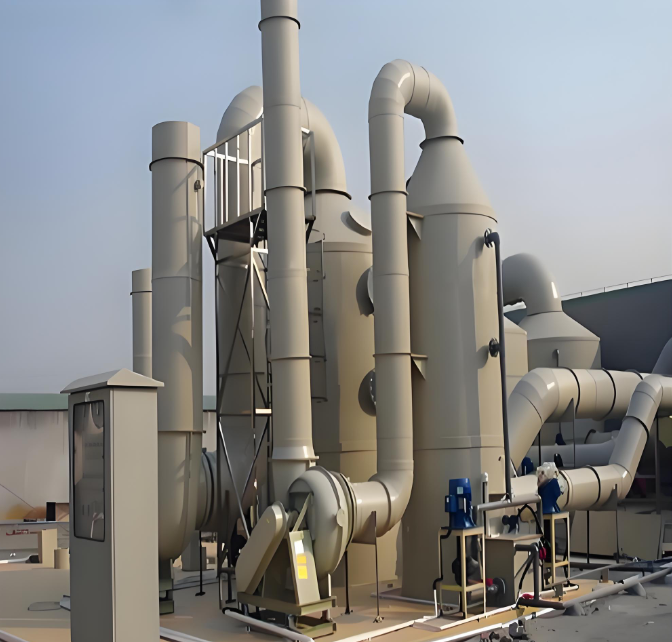
This project mainly treats waste gas generated in the leaching oil production process. The leaching oil production method uses oil-soluble solvent to extract grease from blank through wetting penetration, molecular diffusion and convection diffusion. The project is equipped with 4 sets of FINE-JH80000 waste gas treatment equipment, and the total waste gas treatment capacity is 320,000 m³/h.
2. Pollutant Analysis
2.1 Waste Gas Type
The main waste gas pollutants in the oil production industry are ammonia gas, non-methane total hydrocarbons (aromatic hydrocarbons) and odor gas.
2.2 Pollutant Hazards
The odor gas generated during oil processing is irritating. Without treatment, it will pollute the workshop and surrounding air, affect human respiratory system, endanger the occupational health of employees, and cause air pollution to the surrounding environment.
3. Treatment Process
3.1 Process Flow
Waste gas collection → Water washing tower → Microwave photooxygen catalytic deodorization → Standard emission
3.2 Process Introduction
The waste gas is collected by the air collecting system and transported to the water washing tower. The soluble gas and particulate matter are removed by water washing. Then the waste gas enters the microwave photooxygen catalytic deodorization equipment to decompose odor molecules. Finally, the purified gas is discharged up to the standard.
4. Project Evaluation
The project has passed the acceptance of local environmental protection department and on-site sampling inspection by a third-party testing institution. The odor treatment efficiency is excellent, and the waste gas concentration is far lower than the relevant national emission standards. This project eliminates waste gas pollution in the workshop and surrounding environment, inhibits the diffusion of surrounding odor, and effectively protects the occupational health of employees and the surrounding environment.