
 +86 15853145085
1. Application Scope of Organic Waste Gas Treatment Equipment
The organic waste gas treatment equipment is applicable to the deodorization and purification treatment of organic and inorganic malodorous gas in food processing plants, meat processing plants, slaughterhouses, poultry feed mills, paper mills, sewage treatment plants, garbage transfer stations, manure treatment plants, oil refineries, rubber factories, leather factories, printing plants, chemical plants, hospitals, traditional Chinese and western pharmaceutical factories, metal foundries, plastic recycling plants, spraying solvent factories, electroplating and welding factories.
A large amount of fish meal and fish slurry are used in the production of feed and pet feed. The odor concentration is related to fish species, growth environment, freshness during processing, processing methods and storage methods. Such materials will deteriorate to a certain extent from the storage warehouse to the feed factory. Fish protein autolyzes into various amino acids. Under the action of bacteria, sulfur-containing compounds, ammonia, biogenic amines and organic acids are generated. These substances have strong stench. In addition, fats, oils and food scraps will also produce unpleasant odors.
At present, the pollution of odor substances in domestic feed processing plants has not been effectively controlled. Similar to dust generation, the odor of feed mills is generated during transportation, mixing and molding processes. Therefore, odor control must be combined with dust control to achieve the dual purposes of deodorization and dust control.
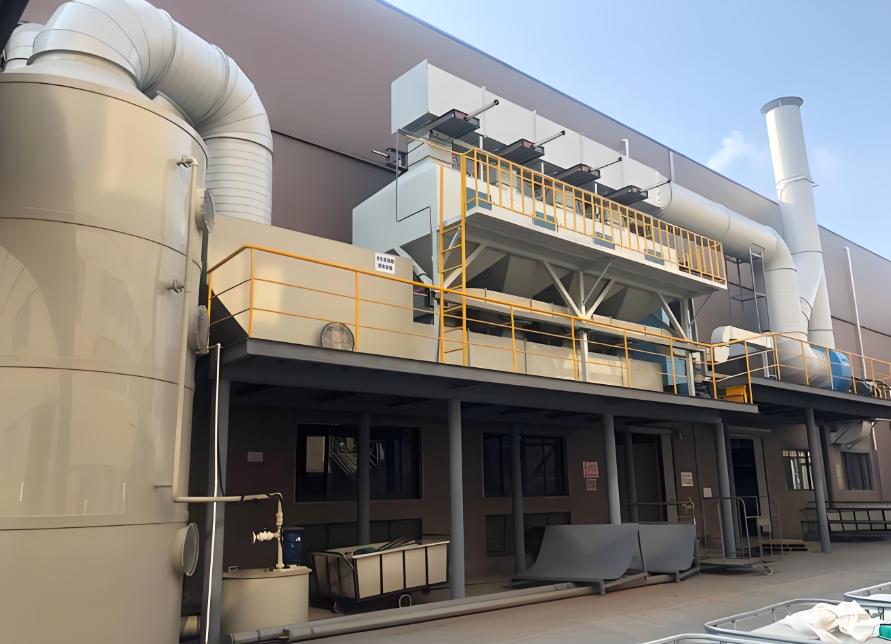
2. Performance Characteristics of Organic Waste Gas Treatment Equipment
The organic waste gas treatment equipment can adapt to the deodorization and purification treatment of high-concentration, large-air-volume and different malodorous gas substances. It can operate continuously for 24 hours a day with stable and reliable operation.