
 +86 15853145085
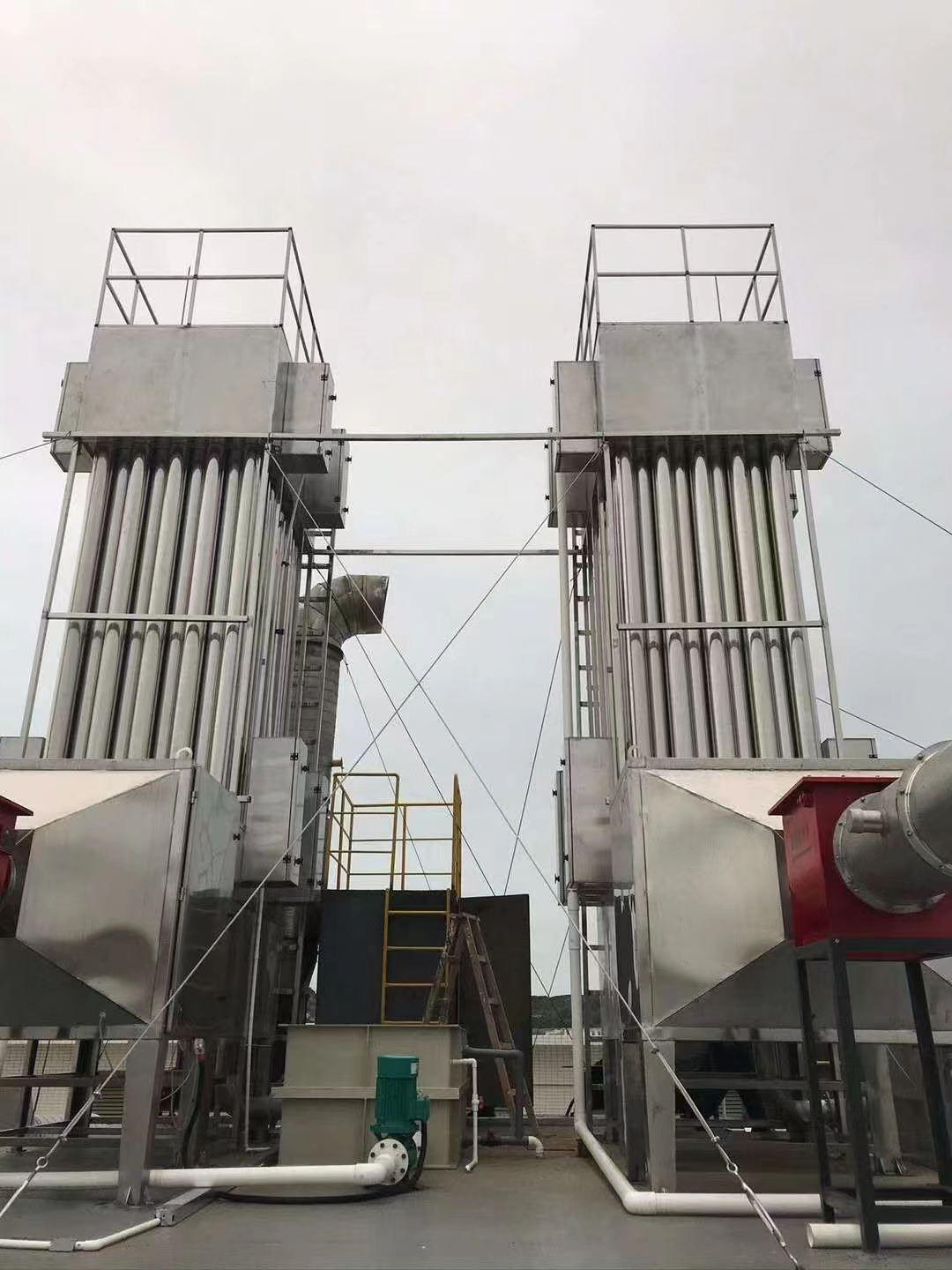
Wet high-voltage electrostatic dedusting is an efficient process for industrial black smoke treatment. Its core principle is to charge dust particles through a high-voltage electric field and realize purification by liquid capture, achieving ultra-low emission standards.
Ⅰ. Core Process Principle
High-voltage Ionization
After flue gas enters the electric field, dust particles are charged under high-voltage electricity.
Liquid Film Capture
Dust is adsorbed onto anode plates or tube bundles by the discharge of cathode wires, and a uniform water film is formed on the surface of anode plates.
Washing and Separation
Charged dust is captured by the water film and flows into the bottom liquid collection tank along with the washing liquid. The purified flue gas is discharged outward.
Ⅱ. Key Advantages
High Dedusting Efficiency
It can remove fine pollutants such as PM2.5 and SO₃ acid mist, with the emission concentration reduced to below 10mg/m³.
Adaptable to Complex Flue Gas
It is applicable to industrial black smoke with high humidity and high viscosity without secondary dust emission.
Stable Operation
There is no bag pasting or ash blockage problem existing in dry dust collectors, resulting in low maintenance cost.
Ⅲ. Applicable Scenarios
Boiler flue gas treatment in electric power, iron and steel, chemical and other industries.
Purification of dusty black smoke generated by waste incineration and non-ferrous metal smelting.
Industrial flue gas treatment projects requiring ultra-low emission in accordance with new environmental protection regulations.
Ⅳ. Core Equipment Composition
Electric Field Body
Consisting of anode plates or tube bundles, cathode wires and high-voltage power supply devices.
Spray System
It sprays clean water on the anode surface to form a uniform water film.
Circulating Water Treatment System
The washing liquid is collected, precipitated and filtered for recycling to reduce water resource consumption