
 +86 15853145085
1. Project Overview
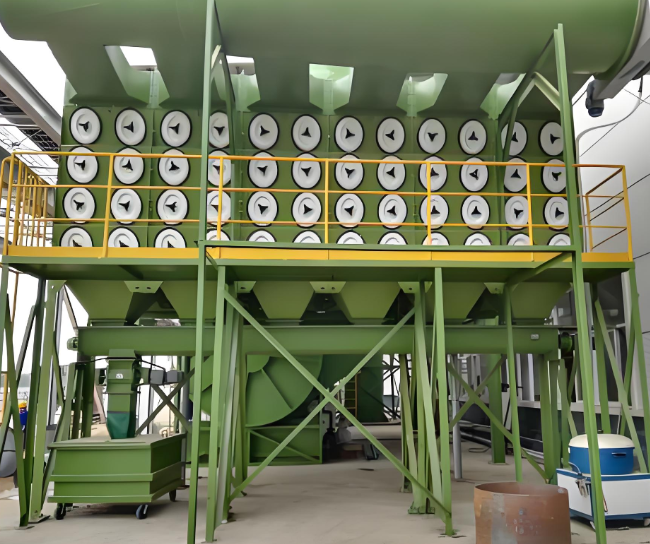
A large amount of composite waste gas is continuously generated in core processes such as smelting, molding, pouring and shakeout during the casting production. The pollutant composition is highly correlated with the casting process. The waste gas is mainly characterized by high-concentration dust and multi-component harmful gas. The dust includes metal oxide particles such as iron, aluminum and silicon generated by smelting, as well as quartz sand and resin debris produced in the resin sand molding process. Harmful gases cover sulfur dioxide and nitrogen oxides formed by smelting reaction, volatile organic compounds decomposed from resin sand, accompanied by high-temperature water vapor at 60-120℃. Direct discharge of such waste gas without effective treatment will not only corrode production equipment and reduce casting machining accuracy, but also endanger operator health, pollute the surrounding atmospheric environment, and violate the Atmospheric Pollution Prevention Law and Hainan local environmental protection control requirements. To strengthen enterprise environmental governance capacity and ensure stable compliant discharge of waste gas, Hainan Zhongcheng Technology Development Co., Ltd. entrusts Zhonghuan Lvzhou (Shandong) Equipment Manufacturing Co., Ltd. to customize a special casting waste gas treatment scheme with cartridge dust collector and spray tower as the core equipment.
2. Pollutant Analysis and Hazards
2.1 Main Pollutants
2.2 Formation and Hazards of Pollutants
2.2.1 Hazards to Human Health
2.2.2 Production Safety Risks
2.2.3 Ecological Environmental Impacts
3. Design Basis and Principles
3.1 Design Basis
Environmental Protection Law of the People's Republic of China (Revised in 2015)
Atmospheric Pollution Prevention and Control Law of the People's Republic of China (Revised in 2018)
GB 39726-2020 Emission Standard of Air Pollutants for Casting Industry
GBZ 2.1-2019 Occupational Exposure Limits for Hazardous Factors in Workplace Part 1: Chemical Hazardous Factors
GB 3095-2012 Ambient Air Quality Standards
HJ 1292-2023 Technical Guideline for Feasible Air Pollution Prevention and Control Technologies in Casting Industry
GB 50016-2014 Code for Fire Protection Design of Buildings (2018 Edition)
GB 37822-2019 Standard for Non-Organized Emission Control of Volatile Organic Compounds
GB 50243-2016 Code for Acceptance of Construction Quality of Ventilation and Air Conditioning Engineering
GB 50235-2010 Code for Construction and Acceptance of Industrial Pipeline Engineering
National electrical industry standards: GB 50054-2011 Code for Design of Low Voltage Power Distribution
GB 50034-2013 Standard for Lighting Design of Buildings
3.2 Design Principles
Accurate Compliance Principle: The discharged waste gas strictly complies with GB 39726-2020 Emission Standard of Air Pollutants for Casting Industry and special emission limits of Hainan environmental protection department, in which particulate matter ≤10mg/m³, sulfur dioxide ≤30mg/m³, nitrogen oxides ≤150mg/m³, and non-methane total hydrocarbons ≤60mg/m³ to ensure stable compliance of all indicators.
Classified Treatment Principle: The combined process of cartridge dust collector and spray absorption tower is adopted. The cartridge dust collector efficiently removes dust first, and then the spray tower absorbs harmful gases in a targeted manner to avoid mutual interference between dust and gas, realizing dual purification of dust removal and gas elimination to ensure treatment efficiency.
Safety Adaptation Principle: The cartridge dust collector is equipped with explosion pressure relief device, spark detection and fire extinguishing system and pulse jet cleaning system. The spray tower is made of temperature-resistant and anti-corrosion materials. The system design adapts to the temperature fluctuation of 60-120℃ in the smelting process, with 15% air volume redundancy reserved for future production capacity improvement.
Economic and Efficient Principle: Long-life membrane filter cartridges and high-efficiency atomizing nozzles are selected to extend the replacement cycle of vulnerable parts. The spray tower adopts circulating absorption liquid design, combined with automatic dosing device to accurately control reagent dosage and reduce operation and maintenance costs. The metal dust collected by the dust collector can be recycled to improve resource benefits.
4. Design Objectives
The total purification efficiency of casting waste gas is significantly improved. The dust removal efficiency ≥99.5%, and sulfur dioxide removal efficiency ≥90%. After treatment, particulate matter ≤10mg/m³, sulfur dioxide ≤30mg/m³, nitrogen oxides ≤150mg/m³, non-methane total hydrocarbons ≤60mg/m³. All indicators stably meet national and local emission standards.
A special 18-meter-high exhaust funnel is constructed, equipped with standardized sampling platform, monitoring holes and online monitoring equipment interfaces in accordance with specifications. The monitoring data is uploaded to Hainan Ecological Environment Bureau monitoring platform and enterprise central control system in real time to meet the requirements of environmental supervision and internal enterprise management.
The dust concentration at each operating point in the workshop is controlled within the limit of GBZ 2.1-2019 (total dust ≤4mg/m³, respirable dust ≤2mg/m³). The non-organized emission concentration of harmful gases meets relevant standards, completely eliminating indoor dust pollution and pungent odor to improve the operating environment.
The system realizes fully automatic operation with functions such as dust concentration over-limit alarm, filter cartridge blockage early warning, automatic pH adjustment of spray liquid and equipment fault self-diagnosis. The annual stable operation time is ≥8500 hours to meet the enterprise's multi-shift continuous production demand.
5. Casting Waste Gas Treatment Process Design and Description
5.1 Process Selection Basis
Efficient classified treatment: The cartridge dust collector adopts membrane filter material with dust removal efficiency of 99.5% for particles above 1μm, eliminating core dust pollution from the source. The spray tower uses alkaline absorption liquid combined with oxidant to synchronously remove sulfur dioxide, nitrogen oxides and acid gases, realizing collaborative treatment of multiple pollutants and avoiding incomplete treatment of single process.
Stable and reliable operation: In the pretreatment link, the heat exchanger cools high-temperature waste gas below 60℃, which not only protects subsequent filter cartridges from high-temperature damage, but also reduces dust adhesion and blockage caused by water vapor condensation. The filter cartridge adopts pulse jet cleaning technology, which can automatically adjust the cleaning cycle according to dust concentration to ensure stable equipment resistance.
Strong safety adaptability: The cartridge dust collector adopts explosion-proof design and is equipped with spark detection and fire extinguishing devices to effectively prevent metal dust explosion risks. The equipment is made of temperature-resistant and anti-corrosion materials, and the spray tower is lined with 316L stainless steel anti-corrosion layer to adapt to complex working conditions of casting waste gas.
Resource recycling potential: The metal dust collected by the dust collector can be classified and recycled to reduce raw material waste, meeting the enterprise's circular economy development needs. Part of the waste liquid from the spray tower can be recycled after treatment to reduce water consumption and pollutant emission.
5.2 Process Flow
Supporting System
Pulse jet cleaning system → Dust collection bin → Spray liquid circulation system → Automatic dosing device → Online monitoring and early warning platform → Heat exchanger heat recovery system
5.3 Detailed Process Description
Accurate gas collection at source: Special gas collection devices are set according to waste gas characteristics of different processes. The smelting furnace adopts top suction high-temperature gas collecting hood with heat insulation layer to prevent high-temperature waste gas overflow. The molding and shakeout processes adopt combined side suction and closed gas collection with air outlet wind speed controlled at 1.0-1.2m/s to ensure gas collection efficiency ≥98%. All pipelines are made of 304 stainless steel with internal wear-resistant treatment, and the pipeline wind speed is maintained at 18-20m/s to avoid dust deposition and blockage.
Pretreatment cooling: High-temperature waste gas firstly enters the plate heat exchanger for heat exchange through industrial cooling water, reducing the temperature from 120℃ to below 60℃. It protects subsequent filter cartridges from high-temperature damage and reduces dust adhesion caused by water vapor condensation. The heat recovery efficiency of the heat exchanger reaches 70%, and the recovered heat can be used for workshop heating or auxiliary production heating to realize efficient energy utilization.
Core cartridge dust removal treatment: The cooled waste gas enters the cartridge dust collector, which is equipped with 64 membrane filter cartridges (filtration accuracy: 0.5μm). Dust is efficiently intercepted through filter material interception, inertial collision and diffusion. The system adopts pulse jet cleaning technology, and compressed air blows the filter cartridges at regular intervals. The cleaning cycle can be automatically adjusted according to the dust collector resistance (800-1200Pa) to ensure dust removal efficiency ≥99.5%. The collected dust falls into the closed bin at the bottom for regular transportation and recycling.
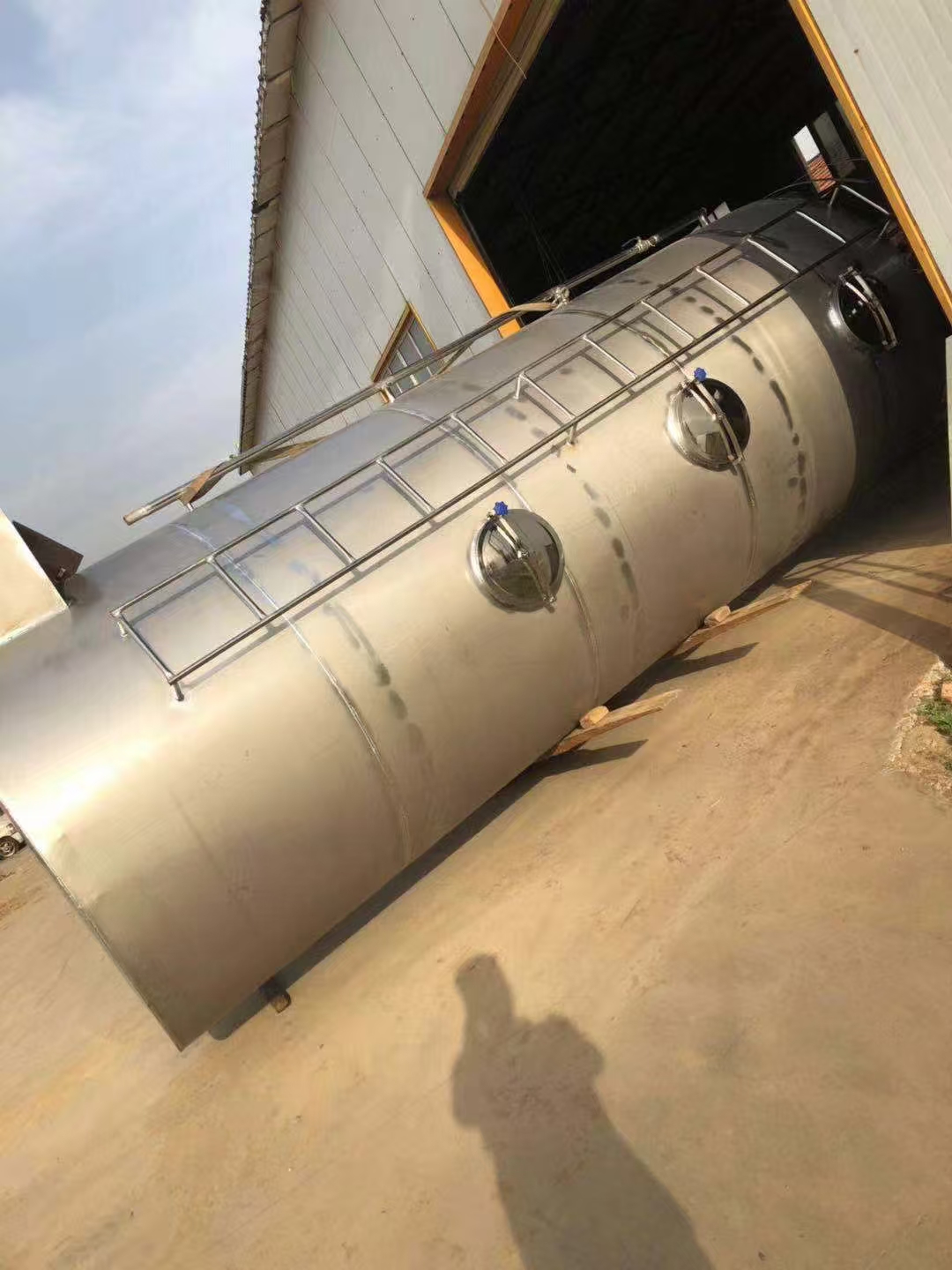
Harmful gas absorption by spray tower: The dedusted waste gas enters the spray absorption tower, which is filled with cascade ring packing to increase gas-liquid contact area and improve absorption efficiency. The spray system adopts composite absorption liquid of sodium hydroxide and sodium hypochlorite. Sodium hydroxide neutralizes sulfur dioxide and hydrogen chloride (such as SO₂+2NaOH=Na₂SO₃+H₂O), and sodium hypochlorite oxidizes and removes part of nitrogen oxides and VOCs. The pH value inside the tower is controlled at 8-9, and the online monitor links the automatic dosing device to accurately adjust reagent dosage, ensuring harmful gas removal efficiency ≥90%.
Advanced purification and operation management: The gas treated by spraying enters the wire mesh demister to intercept residual water mist and tiny particles with particle size ≥0.1μm, and the demisting efficiency ≥99%. The induced draft fan sends the purified gas into the 18-meter exhaust funnel for discharge. Multi-parameter online monitoring equipment is installed at the exhaust outlet to real-timely monitor the concentration and flow of particulate matter, sulfur dioxide and nitrogen oxides. The metal dust collected by the dust collector is regularly recycled by professional institutions. The spray waste liquid is discharged up to standard or partially recycled after precipitation and neutralization treatment to form a closed-loop environmental management system.
6. Company Profile
Zhonghuan Lvzhou (Shandong) Equipment Manufacturing Co., Ltd. Consultation Hotline: 158-5314-5085