
 +86 15853145085
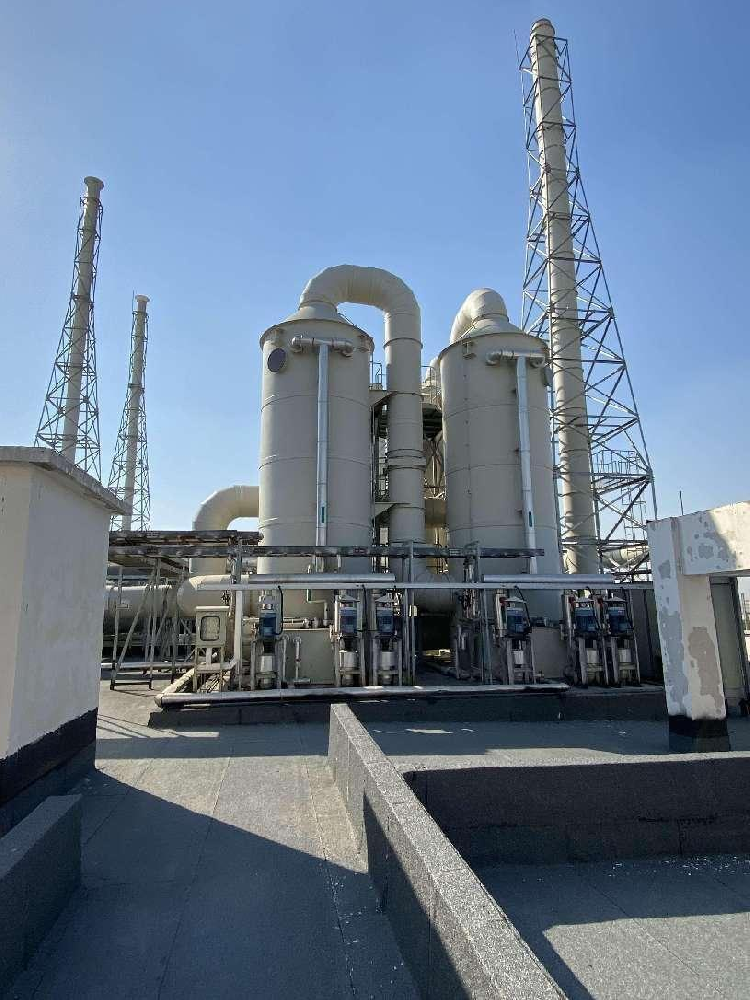
1. Project Overview
Anyang Feiteng Ferroalloy Co., Ltd. is a leading domestic enterprise focusing on the R&D and manufacturing of silicon carbide epitaxial wafers, and also the first domestic silicon carbide epitaxial material enterprise certified by the automotive quality management system. With advanced technical strength and strict quality control, its silicon carbide epitaxial wafer products are widely used in high-end fields such as new energy vehicles, photovoltaic power generation and industrial control, providing core support for the independent development of China's semiconductor industry.
2. Pollutant Analysis and Hazards
2.1 Main Pollutants
2.2 Formation and Hazards of Pollutants
2.2.1 Hazards to Human Health
2.2.2 Production Safety and Quality Risks
2.2.3 Ecological Environmental Impacts
3. Design Basis and Principles
3.1 Design Basis
Environmental Protection Law of the People's Republic of China (Revised in 2015)
Atmospheric Pollution Prevention and Control Law of the People's Republic of China (Revised in 2018)
GB 16297-1996 Comprehensive Emission Standard of Air Pollutants
GBZ 2.1-2019 Occupational Exposure Limits for Hazardous Factors in Workplace Part 1: Chemical Hazardous Factors
GB 3095-2012 Ambient Air Quality Standards
HJ/T 387-2007 Adsorption Purification Device for Industrial Waste Gas
HJ/T 477-2009 Flue Gas Wet Desulfurization Equipment
GB 30799-2014 Emission Standard of Pollutants for Electronic Industry
GB 50243-2016 Code for Acceptance of Construction Quality of Ventilation and Air Conditioning Engineering
GB 50235-2010 Code for Construction and Acceptance of Industrial Pipeline Engineering
National electrical industry standards: GB 50054-2011 Code for Design of Low Voltage Power Distribution
GB 50034-2013 Standard for Lighting Design of Buildings
3.2 Design Principles
Accurate Compliance Principle: The discharged acid mist waste gas strictly complies with GB 30799-2014 Emission Standard of Pollutants for Electronic Industry, in which fluoride (calculated as F) emission concentration ≤3mg/m³, hydrogen chloride emission concentration ≤10mg/m³, sulfuric acid mist emission concentration ≤4mg/m³. It meets the clean production requirements of the ferroalloy industry.
Classified Treatment Principle: According to the difference of acid mist components in different processes, the mode of classified collection and graded treatment is adopted. Hydrofluoric acid mist is collected and treated separately, and mixed acid mist is centrally purified to balance treatment efficiency and economy.
Safety Adaptation Principle: Equipment and pipelines are made of acid corrosion resistant materials, equipped with acid mist concentration online monitoring, emergency spray and automatic alarm systems to adapt to the clean and continuous production rhythm of the workshop without affecting the stability of production processes.
Green and High-efficiency Principle: High-efficiency absorption technology is selected to improve the recovery and utilization rate of acid liquid. Optimize the water circulation system to reduce wastewater generation. The equipment features low operation energy consumption and convenient operation and maintenance, conforming to the enterprise's concept of energy saving, consumption reduction and green production.
4. Design Objectives
The purification efficiency of acid mist waste gas is ≥99%. After treatment, fluoride (calculated as F) ≤3mg/m³, hydrogen chloride ≤10mg/m³, sulfuric acid mist ≤4mg/m³ and nitric acid mist ≤5mg/m³. All indicators strictly comply with GB 30799-2014 standards and local environmental protection requirements.
A special exhaust funnel with a height of no less than 15 meters is constructed. Standard sampling ports and online monitoring platforms are installed on the exhaust funnel to ensure sufficient high-altitude diffusion of purified waste gas and avoid impacts on the surrounding environment.
The acid mist concentration at each operating point in the production workshop is controlled within the limit of GBZ 2.1-2019 standard, including hydrofluoric acid ≤0.5mg/m³, hydrochloric acid ≤7.5mg/m³ and sulfuric acid ≤1mg/m³. The pungent odor is completely eliminated to improve the clean operating environment.
The system realizes automatic operation and intelligent monitoring with functions such as acid mist concentration over-limit alarm, equipment fault early warning and emergency disposal. The annual stable operation time is ≥8500 hours to meet the continuous production demand of the workshop.
5. Acid Mist Waste Gas Treatment Process Design and Description
5.1 Process Selection Basis
Strong targeted performance and thorough purification: Hydrofluoric acid mist adopts the dual mechanism of sodium hydroxide absorption and calcium chloride capture. Sodium hydroxide neutralizes hydrofluoric acid to generate sodium fluoride, and calcium salt reacts to generate insoluble calcium fluoride to avoid secondary pollution. Mixed acid mist is treated by multi-stage processes of alkaline spray and acid neutralization to ensure efficient absorption of different acid mist components.
Corrosion resistance adaptation: The main equipment is made of PVDF (Polyvinylidene Fluoride), and the pipelines are made of FRPP (Fiber Reinforced Polypropylene), which can resist high-concentration acid mist corrosion and meet the harsh environmental requirements of Feiteng workshop.
Stable and reliable operation: The system adopts automatic liquid level control and pH adjustment, which can automatically adjust chemical dosing amount according to acid mist concentration, adapt to production load fluctuation and ensure stable treatment effect.
Outstanding environmental performance: The absorption liquid is recycled. The regularly discharged wastewater has low fluorine ion concentration for subsequent treatment. The collected calcium fluoride sediment can be disposed in compliance with regulations to realize pollutant reduction.
5.2 Process Flow
5.2.1 Hydrofluoric Acid Mist Treatment Flow
5.2.2 Mixed Acid Mist Treatment Flow
5.2.3 Supporting System
5.3 Detailed Process Description
Accurate classified collection: Independent collection systems are set for acid mist from different processes. The etching station adopts a closed cover (linked with the epitaxial furnace) to ensure no leakage of hydrofluoric acid mist. The cleaning station adopts a side suction clean gas collecting hood with wind speed controlled at 0.8-1.2m/s to avoid affecting workshop cleanliness. All gas collecting hoods are equipped with PP deflectors to reduce acid mist residue.
Pretreatment impurity removal: Hydrofluoric acid mist firstly enters the pre-filter, and the PVDF filter membrane removes entrained silicon powder particles to prevent pipeline blockage and packing scaling in the absorption tower. Mixed acid mist is transported through anti-static pipelines to avoid static risk caused by dust accumulation.
Core absorption and purification: ① Hydrofluoric acid mist: In the primary alkali absorption tower, 10% sodium hydroxide solution reacts with hydrofluoric acid to generate sodium fluoride with absorption efficiency up to 95%. Calcium chloride solution is added in the secondary fluorine ion capture tower to convert sodium fluoride into calcium fluoride precipitate for further reduction of fluorine ion concentration. ② Mixed acid mist: The primary alkaline spray tower uses sodium carbonate solution to absorb hydrochloric acid mist and nitric acid mist to generate soluble salts. The secondary neutralization spray tower adjusts the pH value to 6-7 to ensure thorough neutralization of residual acid mist.
Defogging and discharge: The purified gas passes through a high-efficiency baffle demister to remove entrained liquid droplets (defogging efficiency ≥99%), and then is lifted to the 15-meter-high exhaust funnel for discharge by an anti-corrosion induced draft fan. Fluoride and hydrogen chloride online monitoring equipment is installed on the exhaust funnel, and data is uploaded to the enterprise central control room and environmental protection platform in real time.
Waste liquid and residue treatment: The circulating absorption liquid is detected regularly. When the fluorine ion concentration exceeds the standard, it is discharged into the wastewater collection tank and discharged up to standard after chemical precipitation. The calcium fluoride precipitate generated by the hydrofluoric acid treatment system is dehydrated by a dehydrator and recycled by qualified institutions to realize standardized solid waste management.
6. Company Profile
Zhonghuan Lvzhou (Shandong) Equipment Manufacturing Co., Ltd. Consultation Hotline: 158-5314-5085