
 +86 15853145085
Ⅰ. Scheme Overview
Aiming at volatile organic compounds (VOCs), odorous gas and some toxic and harmful pollutants generated during pharmaceutical production, this scheme adopts UV photolysis purification technology as the core treatment process. Combined with pretreatment system, gas collection system and tail gas discharge device, it realizes efficient purification of waste gas. This scheme is applicable to waste gas treatment in chemical synthesis pharmacy, biopharmaceutics, traditional Chinese medicine extraction and other pharmaceutical workshops. It can effectively remove organic pollutants such as benzenes, ketones, esters, alcohols and amines, as well as odorous gases including hydrogen sulfide and ammonia. After treatment, the exhaust emission meets the requirements of Emission Standard of Air Pollutants for Pharmaceutical Industry (GB 37823-2019) and local environmental protection regulations.
Ⅱ. Technical Principle
The core of UV photolysis purification technology is to irradiate waste gas molecules with high-energy ultraviolet rays (185nm+254nm), triggering a series of photochemical reactions to decompose and purify pollutants. The specific principle is as follows:
1. Chemical Bond Cleavage
The energy of high-energy UV photons (100-700kJ/mol) is far higher than the chemical bond energy of organic pollutant molecules (such as C-C bond: 346kJ/mol, C-H bond: 413kJ/mol). It can directly break carbon-carbon bonds and carbon-hydrogen bonds in organic molecules, decomposing macromolecular pollutants into small molecular compounds such as CO₂, H₂O and harmless inorganic substances.
2. Free Radical Oxidation
Ultraviolet rays irradiate oxygen (O₂) and water molecules (H₂O) in the air to generate a large number of strong oxidizing substances such as hydroxyl radicals (・OH), oxygen atoms (O) and ozone (O₃). Among them, the oxidation potential of hydroxyl radicals is up to 2.8eV, which can rapidly oxidize and decompose residual organic pollutants into harmless inorganic substances.
3. Odor and Toxicity Removal
For odorous gases such as hydrogen sulfide and ammonia, ultraviolet rays can directly destroy their molecular structures. Meanwhile, these pollutants are oxidized into odorless and harmless substances such as sulfate and nitrate by strong oxidants, completely eliminating peculiar smell and toxicity.
Ⅲ. System Composition and Configuration
(Ⅰ) Waste Gas Collection System
1. Collection Method
Aiming at exhaust sources such as reaction kettles, centrifuges, dryers and batching tanks in pharmaceutical workshops, the combined mode of closed collection and local air collecting hood is adopted to prevent unorganized gas diffusion.
2. Conveying Equipment
Corrosion-resistant FRP or PP air ducts are selected, matched with explosion-proof centrifugal fans (selected according to air volume and wind pressure). Soft connections and silencing devices are installed at the inlet and outlet of the fan to reduce operating noise.
(Ⅱ) Pretreatment System
1. System Function
It removes dust, particulate matter, viscous substances and part of water-soluble pollutants in waste gas to avoid blockage of UV lamps and extend the service life of equipment.
2. System Configuration
The combined pretreatment process of spray washing tower and high-efficiency filter is adopted. The spray tower is filled with corrosion-resistant fillers, and alkaline or neutral detergent is sprayed to absorb water-soluble pollutants. The high-efficiency filter (filtration accuracy ≥1μm) further intercepts fine dust and mist droplets to ensure the cleanliness of waste gas entering the photolysis equipment.
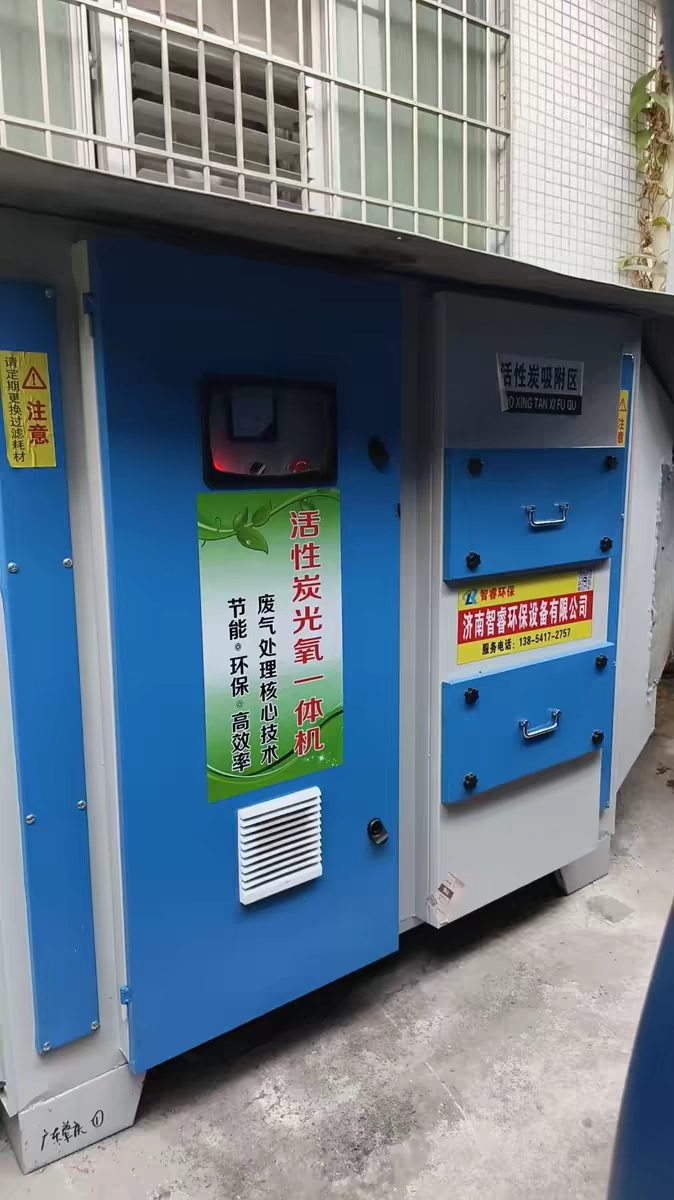
(Ⅲ) Core Treatment System (UV Photolysis Purification Equipment)
1. Equipment Structure
Modular design is adopted. The main body is made of 304 stainless steel or glass fiber reinforced plastic (selected according to gas corrosivity), with multi-layer UV lamp arrays, reflectors and gas deflectors inside.
2. Key Technical Parameters
UV Lamp: Dual-wavelength (185nm+254nm) high-energy ultraviolet lamps are adopted. The single power is ≥150W with service life ≥8000 hours, equipped with convenient lamp replacement devices.
Retention Time: The retention time of waste gas inside the equipment is ≥1.5 seconds to ensure sufficient decomposition of pollutants.
Treatment Air Volume: Customized according to exhaust emission of pharmaceutical workshops. The air volume range of single equipment is 5000-50000m³/h, and multiple units can operate in parallel.
Equipment Resistance: ≤500Pa to reduce fan energy consumption.
3. Safety Configuration
The equipment is internally equipped with oxygen concentration monitor, explosion-proof pressure relief device and over-temperature alarm system to ensure operational safety. Maintenance doors and observation windows are arranged for daily inspection and maintenance.
(Ⅳ) Tail Gas Discharge System
The purified tail gas is transported through standard discharge pipes to the exhaust stack which is 1.5m higher than the roof. Sampling ports and monitoring platforms are installed on the stack to facilitate regular detection by environmental protection departments. Rain caps and anti-backflow devices are equipped at the stack outlet to prevent rainwater inflow and gas backflow.
Ⅳ. Process Advantages
High Purification Efficiency: The removal rate of VOCs in most pharmaceutical waste gas is ≥90%, and the odor removal rate is ≥95%. All emission indicators meet discharge standards after treatment.
Low Operating Cost: No chemical agents are required, only electric energy is consumed. UV lamps have long service life with low maintenance cost, and no secondary pollution is generated during operation.
Wide Adaptability: It can treat high, medium and low concentration pharmaceutical waste gas (VOCs concentration ≤1000mg/m³). It has strong adaptability to complex components, not affected by temperature and humidity (operating temperature: -20℃~60℃, relative humidity ≤90%).
Convenient Installation: Modular design covers a small area, which can be flexibly arranged according to workshop space. The installation period is short (single equipment installation ≤3 days).
Safe and Reliable: No open flame is generated during equipment operation. Multiple safety protection devices are configured to meet the explosion-proof and anti-corrosion requirements of pharmaceutical workshops.
Ⅴ. Operation and Maintenance
1. Daily Operation
Startup Sequence: Start the pretreatment system first, then the fan, and finally the UV photolysis equipment to ensure that waste gas enters the core treatment unit after pretreatment. The shutdown sequence is reversed.
Regularly check the operating state of the fan, liquid level and detergent concentration of the spray tower, and replenish or replace the detergent in a timely manner.
2. Maintenance
Clean reflectors and deflectors of UV photolysis equipment every week to remove surface dust; inspect lamp operation every month and replace damaged or attenuated lamps in time.
Clean spray tower fillers and filters quarterly, and replace high-efficiency filter elements; conduct comprehensive equipment inspection every year to check circuit systems and safety devices.
3. Consumable Replacement
UV lamps are recommended to be replaced every 8000 hours. High-efficiency filter elements are replaced every 3-6 months (adjusted according to dust content of waste gas).
Ⅵ. Applicable Scenarios
This scheme is suitable for pharmaceutical enterprises such as chemical pharmacy, biopharmaceutics, traditional Chinese medicine preparation and API production, especially for the following types of waste gas:
1. VOCs waste gas such as benzene, toluene, xylene and ethyl acetate generated by chemical synthesis reaction;
2. Odorous gases such as ammonia, hydrogen sulfide and methyl mercaptan produced by fermentation process;
3. Mixed waste gas containing organic solvent and dust generated during extraction and drying process;
4. Low-concentration and large-air-volume organic waste gas generated in clean workshops.